
From the interim VP: Answering your questions
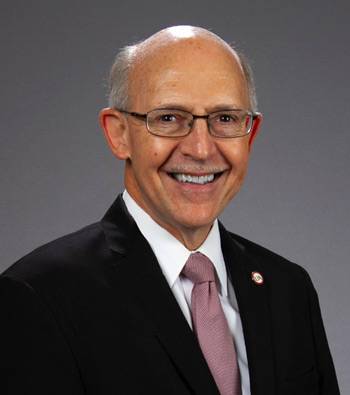
Get the latest Division updates from our Interim Vice President, Chuck Culver.
Get the latest Division updates from our Interim Vice President, Chuck Culver.
This is the No. 1 question I am asked. We have a website dedicated to this search, that includes information for both applicants and the public. On this site you can find:
* The members of the search committee.
* Past news releases related to the search.
Here’s the official announcement sent to key outlets advertising the position.
First, let me note my appreciation to System President Bobbitt for chairing this search. It speaks to the significance the System places in getting the very best person for the job. Secondly, please reach out to any of the Committee members with your questions or suggestions. Lastly, I want to emphasize that evaluations of applications and nominations will begin Feb. 1.
Each of you has a role to play to ensure we have a great candidate pool. A national search firm was not engaged. Instead, the Committee is relying on us to encourage applications or make nominations. The Committee will not know the internal or external universe of excellent potential candidates. If a person has not applied it does not mean a lack of interest – perhaps the potential candidate is not actively seeking another job but can be encouraged to apply if contacted by the Committee or does not wish to seek the job without an invitation. In any event, you can nominate an individual you believe will serve us well, and it is as simple as sharing a name and contact information with President Bobbitt at his email address.
All applications must be sent through the Workday HR portal.
In my first State of the Division address, I promised be transparent and truthful. First, let me say that the deliberation process has already begun. Division of Agriculture representatives first discussed with campus representatives in December 2021, a mutual desire to communicate frequently about projected salary adjustments in hopes that neither institution surprises the other. Right after the 1st of the year, campus representatives reached out on preliminary thoughts. We are very grateful for this level of communication.
Secondly, without question there has been wariness in the past to not create false expectations or not box in the Division when the financial situation was so fluid. But most of the time, what appears to be secretiveness is actually the late nature of making the final decision. Once made, the decision has been quickly implemented. When I say “late nature” I mean (1) having to wait and see if the Division would be successful in getting additional state funding and the nature of that funding (base increase versus one-time funding), and (2) needing to obtain necessary approval or guidance from the System/Board levels before the announcement and implementation.
When balancing if and how much, I am learning just how complex this decision actually is. First, we must determine the true nature of our financial situation – not just now, but also looking over the horizon as well. As you know, we don’t have a stream of income such as student tuition and fees. The bulk of our funding must be secured on an annual basis – state, federal, and county appropriations. Competitive grants from federal sources, even those awarded on a multi-year basis, are dependent upon annual appropriations. And contributions from check-off funds are annual allocations. Our lack of “pledgable” long-term assets is why we don’t have borrowing/bonding authority and why we are always balancing risk. Tracking federal shutdowns, long-term continuing resolutions, state tax cuts, crop prices and levels of production, county funding, revenue stabilization classifications, state and federal sequestrations, insurance and other benefits costs, staffing needs, and the like is more than an academic exercise. On top of all this, we have to have an operating surplus on hand to cover the cost reimbursable nature of our grants, and we must save for construction and deferred maintenance needs.
With all that said, Bob and JF are moving heaven and earth to take care of the entire family. As long as I am in my current role, they will have my firm backing. Deacue has been a strong ally as well. We are also blessed to have the best CFO in the System, Matt Brown, to help guide us. The hope is that Division administrators will have a decision to share by April, but certainly at the first opportunity, and we will share how we came to the decision.
On the federal front, we are under an extended Continuing Resolution (CR; spending at last fiscal year’s level) until Feb. 18. It is very likely that a third CR will need to be adopted. There has been some movement towards finalizing the FY22 omnibus bill (rolling together some or all of the 12 appropriations bills), but it is doubtful it will happen within a month. On Jan. 13, there was a “4-Corners” meeting, consisting of the House and Senate Appropriations Chair and Ranking Member, that was deemed “constructive”. Action to move things forward still largely rests in the Senate (where both co-chairs have announced their retirement), but they don’t have a top line budget number yet and struggles previously associated with the derailed reconciliation bill (Build Back Better bill) are creeping into the omnibus discussion. Pressure may begin to build on both parties as the negative impacts of a yearlong CR are coming to light. However, overhanging everything are the politics of the looming ‘22 elections.
For federal FY23, which begins Oct. 1 this year and runs to Sept. 30, 2023, the White House has sent signals to Congress that the President’s Budget Request will not be released until sometime in March. Both the President’s annual address to Congress on March 1, and the delays finalizing the FY22 omnibus, are dictating this schedule.
On the state front, the fiscal session begins Feb. 14. The session is to be focused on budget issues and is to be no more than 30 days unless extended another 15 days by a three-quarters vote of the body.
Budget hearings in advance of the session have begun. The first one for the Division was on Jan. 11. The Joint Budget Committee approved our pre-session request.
In May 2021, we were a victim of automated clearing house (ACH) fraud. The online phishing attack was quite sophisticated and, but for the grace of God, anyone of us could have been similarly snared. Upon learning of the breach, we immediately notified proper authorities and requested that Internal Audit investigate. Following a thorough review with recommendations, and in an effort to make future attacks less likely to be successful, the Division (1) adopted new protocols and procedures, (2) updated our Information Security Awareness Training policy, and (3) required cybersecurity awareness training for all employees to include identifying and addressing red flags. On Nov. 17, 2021, the Division shared both the completed changes and our promised future action with the UABOT.
Cybersecurity training was required of all Division computer users. Access to the training modules was broadly communicated and all covered employees were to complete the training by the end of the calendar year. At year-end, 98.54% of CES employees and 89.26% of AES employees were reported to have completed all the modules. Although a high percentage, it did not meet our promise or our need. Admittedly, 100% compliance is not possible for a number of very valid reasons (terminations, non-users, etc.), however we identified covered users not in compliance and Bob and JF took necessary steps to ensure compliance.
Thanks to compliance actions taken by all of us, Internal Audit reported to Matt Brown that it will mark in their report to UABOT next week that all of their recommendations have been implemented. For this, I am grateful for the seriousness in which you took this effort. Of course, there is more to come. In every quarter of the year, mock phishing attacks will be sent as tests as to whether individual refresher training is needed. And, in October, which was Cyber Security Awareness Month, all Division computer users will be reminded that the three-month window is open to take required annual training. Vigilance is constant.
Our relationship with UAF is deep and historic. Even though the Division is 63 years old following the removal of the AES and CES from UAF in 1959 and placement into a freestanding unit, AES was previously embedded in UAF for 71 years and CES was embedded for 44 years before the split. Even afterwards, our missions have been intertwined. Of course, with all of these connections, there are real differences like delivery of programs, stakeholder groups, and sources of funding.
Over time, squabbles have arisen. The reasons are both real and mythological but should not be lasting or debilitating. It is never too late for people of goodwill to change behaviors and relations.
On Dec. 15, JF, Bob, Deacue, Matt Brown, Christina Miller, and I met with Chancellor Robinson, Provost Terry Martin, Vice Chancellor Mark Power, and Associate Vice Chancellor for Budget and Financial Planning/Interim Associate Vice Chancellor for Business Affairs Cale Fessler. The meeting was very friendly and constructive. Issues of past dispute or misunderstanding (including issues of promotion and tenure, indirect costs, facilities and space allocation, salaries, branding, join appointments, enterprise resource processes/Workday, employee benefits and surplus property) were identified and addressed. Most were readily resolved in spirit to be later codified in writing. A few were committed to small task forces to reach a win-win compromise. A follow-up meeting is being scheduled for the near term. The most important take-aways were the spirit of compromise, the desire to look forward instead of backwards, and the genuine belief that we are both better when we work together.
Establishing working agreements to promote cooperation and minimize conflict are not new to the Division. We have a MOU with UA-Monticello that began May 22, 2018, and a new one with ASU-Jonesboro signed on Sept. 30, 2021. In addition, we have a long history of cooperation and coordination with the University of Arkansas at Pine Bluff School of Agriculture, Fisheries and Human Sciences, and we recently reached out to Southern Arkansas University Department of Agriculture and Arkansas Tech University’s Agriculture Department to meet and discuss areas of cooperation in order to better serve our common stakeholder group. I am grateful that JF, Bob, and Deacue will be joining me in these upcoming visits.
Lastly, I want to thank Chancellor Robinson for inviting me to join the official onstage party for the fall commencement exercise in December. It was a bucket list item which I thoroughly enjoyed.

Copyright ©